
The Atlantic crossing is missing from the surviving record of the Fonda family. We do not know the name of the vessel, the weather on the passage, or the day the passengers first stepped ashore. Then, on 19 October 1651, Gillis Fonda appears abruptly in a court record—and he has business to conduct.
He asked the Court of Rensselaerswyck for permission to earn a living by distilling liquor in the Greenen Bos, on the eastern bank of the Hudson. His proposed workplace was a house belonging to Evert Pels, adjoining the brewery. It was a practical proposal, and one that interested the colonial authorities because distilling was subject to duties. The court allowed it, provided Fonda entered into the required agreement about those payments.
The entry is remarkably concrete. It places Gillis not vaguely “at Albany,” a city that did not yet bear that name, but across the river from Fort Orange. It identifies a landlord, a neighboring brewery, and an occupation. Distilling tied local grain, fuel, trade, and taxes into the everyday economy of the patroonship. Permission mattered because business in the colony was not conducted wholly at a settler’s discretion.
Nothing in the minute tells us whether Gillis walked out of court pleased, whether his still was already assembled, or how profitable the undertaking proved. But one fact stands out. The first secure American record of this immigrant is not a passenger list or a land grant; it is a request for permission to work. The Fonda family’s documentary American story begins beside a brewery.
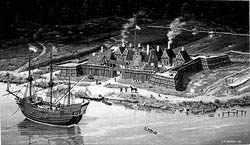
From The Fonda Family in America: An Illustrated Family History, Draft Edition, October 2026. The book contains the chapter’s fuller context and source notes.
Sources and references
- The Fonda Family in America: An Illustrated Family History: Chapter 1 — From Friesland to New Netherland; October 2026 Draft Edition. See chapter source notes.