
The young man who had hoped to serve in the Spanish-American War was rejected for military duty. His path nevertheless took him to Cuba, representing a packing company in the unsettled years surrounding the conflict. When he came home, he turned toward land rather than an army commission.
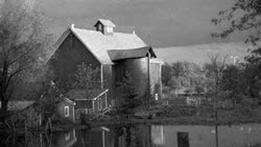
Avondale was an eighty-acre farm in Clay County. Beans and sweet potatoes were ordinary crops, demanding ordinary, repetitive work. But the biographical account records something less ordinary: while engaged in farming, Anthony studied law in the offices of Leo Bock and Judge J. V. C. Carnes. The field and the law book belonged to the same years of his life.
In 1903 he was admitted to the bar. The same account says that he sold the farm at a substantial increase over its purchase price and later worked as a railway claim agent before specializing in land and taxes. The figures and character judgments in that account deserve checking against property and court records. Yet its broad outline is clear: Anthony used one occupation as a bridge to another, in an economy where agriculture and legal commerce increasingly met.
Source: Fonda family archive, “11_Heartland.html,” drawing on a later Missouri biographical sketch of Anthony Phillip Fonda. This is an attributed account, not a reconstructed contemporary diary.
From The Fonda Family in America: An Illustrated Family History, Draft Edition, October 2026. The book contains the chapter’s fuller context and source notes.
Sources and references
- The Fonda Family in America: An Illustrated Family History: Chapter 8 — New Century, New Directions; October 2026 Draft Edition. See chapter source notes.