
A house is easy to describe in a family history once it has been built. It is harder—and often more interesting—to follow the argument over getting it built at all.
After Hester and her second husband, Barent Gerritsen, moved to Wiltwyck, they tried to establish a household and continue their commercial work. Mrs. John Spell’s reconstruction of the local court records describes a sustained dispute with the carpenter engaged to construct their house. The disagreements concerned materials, workmanship, wages, food, and delays. A home on paper had become an accumulation of contested promises.
We do not know what the unfinished work looked like at each stage, and the account should not be transformed into a scene of shouting or slammed doors. But the categories of complaint are eloquent. Timber and labor had to be found and paid for. Food could become part of an arrangement with a workman. A delay could affect when a household moved in, what it could store, and whether a business could operate. The builder, for his part, depended on compensation for work already done.
The dispute also places Hester in a different part of colonial life from the trading debts of Beverwijck. Here the question was not only what goods were owed, but what made a house finished and an obligation fulfilled. Wiltwyck was a small colonial settlement in a region where relations between Dutch settlers and Esopus communities had already turned violent. Building a home there was an economic undertaking in a precarious setting.
Within a short time, the larger conflict of 1663 would overwhelm the household and its plans. Yet the carpenter case deserves to stand on its own. It is a glimpse of history at the scale at which families actually lived: a promised roof, disputed labor, and the exhausting business of making a place habitable.
Source: Spell, “A Career Woman in 17th Century New York” (1964), pp. 129–137, summarizing Wiltwyck court proceedings. The carpenter’s identity, exact hearing dates, decisions, and terms of contract should be confirmed against the original court minutes before publication.
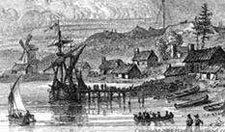
From The Fonda Family in America: An Illustrated Family History, Draft Edition, October 2026. The book contains the chapter’s fuller context and source notes.
Sources and references
- The Fonda Family in America: An Illustrated Family History: Chapter 2 — Becoming an American Family; October 2026 Draft Edition. See chapter source notes.