
Before there was a Kansas City, there was a valuable landing and an awkward question: who would own the ground around it? The Prudhomme tract lay where rivers converged and travelers needed a place to unload and begin the overland journey. Abraham A. Fonda, a New Yorker by birth, appeared at the July 1838 auction and obtained the property for $1,800. The bidding soon became controversial, and the court ordered a new sale.
At the second sale, a company of investors purchased the tract for $4,220. Fonda was among the proprietors who hoped to turn the landing into a town. The participants had to agree on a name. One proposal—“Port Fonda”—would have put Abraham’s surname on the map for generations. Other suggestions, remembered in later histories, included “Kawsmouth,” “Rabbitville,” and “Possumtrot.”
But town-building also involved quarrels. Later Kansas City accounts tell of a dispute between Fonda and Henry Jobe, another interested party. Whatever the personal cause and exact sequence, the proprietors did not choose Port Fonda. They settled instead on the Town of Kansas, named for the river and the Kanza people whose name Europeans had adapted.
Abraham’s role was nonetheless real: he stood among the early investors at the moment when a river landing became the foundation of a city. The lost name makes the episode memorable, but its larger meaning lies in the risks, disagreements, and opportunism of the westward land economy. This account follows later local histories and the Fonda archive; it does not assume that every recollected exchange can be independently verified.
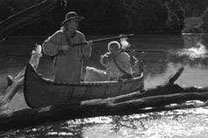
From The Fonda Family in America: An Illustrated Family History, Draft Edition, October 2026. The book contains the chapter’s fuller context and source notes.
Sources and references
- The Fonda Family in America: An Illustrated Family History: Chapter 5 — A New Nation, a Growing Family; October 2026 Draft Edition. See chapter source notes.